


Dog Harness
Premium quality, ergonomic designs, and factory-direct wholesale pricing. We help you scale your pet business with innovative gear and a reliable supply chain.
01
Ergonomic & Safety-First Design
Our harnesses feature No-Pull technology and pressure-relieving padding to protect the dog's trachea and chest. B2B Selling Point: Reduces end-consumer complaints and product returns.
02
Industrial-Grade Durability
Constructed from high-strength nylon and rust-resistant zinc alloy hardware. Each product undergoes rigorous tension testing to ensure safety for medium to large-sized dogs.
03
Eco-Friendly & Breathable Materials
Crafted from breathable mesh fabric meeting OEKO-TEX standards, along with eco-friendly TPR and nylon, these materials comply with international environmental export standards (REACH/RoHS).
04
Flexible Customization
We support custom laser-etching of logos, woven labels, specialized heat-transfer patterns, and customized packaging. We empower brands to build a strong competitive moat.


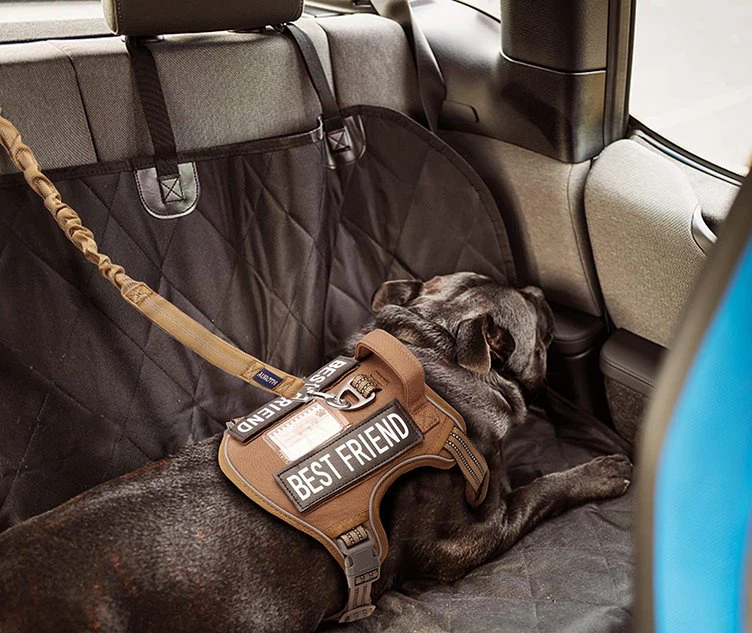
A dog harness is a piece of equipment consisting in part of straps that surround the dog’s torso. It is used to guide, hold, and lift the dog or to utilise its pulling power. It reduces tension on the neck when they pull, and provides free breathing during daily walks.
Better Control
When choosing between a dog harness and a collar, the strength and habits of your dog should be carefully considered. No pull and step in harnesses are in high demand these days, especially for medium to big dogs. Why? Dog harnesses are suitable for large dogs (e.g. German Shepherd Dogs, Belgian Malinois, Labradors, etc.) or dogs that like to pull, as the weight would be more evenly distributed than the collar, hence the risk of neck or back injuries would be lowered, and it would be easier on the dog owner's arms and back as well. The handles also enable the owner to control the dog or provide mobility assistance when needed, and they're useful for owners and puppies in training.
Better Visibility (HI-VIS)
Aside from service dog and therapy dog harnesses that have large patch panels and ID windows for signage to show the handlers' special needs and medical conditions, some dog harnesses have light reflective strips and vest trims that keep you and your dog safe during nighttime walks and in other low light environments. Some dog owners with tactical harnesses get creative with the webbing and attach LED lights and glow sticks to the harness. It's also worth noting that working dogs (e.g. SAR dogs) often wear orange vests to stay visible in the outdoors.
No Pull Front Lead Designs
Many harnesses offer multiple leash clip options at the front chest, between the shoulder blades, and/or near the base of the tail. Different options offer different levels of comfort and support for the dog. Front clips discourage dogs that like to pull; rear clips are good for treks and hiking trips when paired with extra long exploration leashes.
Safety and Protection
Some harnesses use heavy duty materials like nylon and metal buckles to offer better security and prevent escape into traffic and other dangers, and the harnesses cover a large part of the body offering a certain degree of protection against dog bites and wild animal attacks. While it's not bite-proof, it can be life saving. This is especially so for small dogs both in the city and rural/outdoor areas.
Back Clip Harnesses
Back clip harnesses are the most common harness that you'll find when shopping around, and these are the type of dog harnesses that we currently sell.
With a similar design to the front clip harness, back clip harnesses feature D-rings that are positioned in the centre of a dog's back.
Back clip harnesses are by far the simplest and easiest harnesses to use, and can be used with a variety of dog leads, including retractable ones.
We recommend these harnesses for dogs that tend to be quite calm on dog walks, as they are less effective at discouraging pulling.
Y-Shaped Harnesses
Our latest range of back-clip dog harnesses feature a Y-Shaped front design.
Upgraded from our core collection, these harnesses provide greater freedom of shoulder movement during walks.
With improved fit and back clip fastening, each harness helps to distribute a dog's weight and alleviate neck pressure during walks.
Front Clip Harnesses
Commonly referred to as ‘anti-pull harnesses', front clip harnesses feature D-rings for the leash attachment that are positioned on a dog's chest (as opposed to the back).
Front clip harnesses change the point of leverage, so they are best suited to dogs that pull on the lead during walks.
They are helpful for training purposes, as when a dog pulls, the leash moves to the side and shortens, guiding the dog back towards their owner.
Dual Clip Harnesses
Dual clip harnesses allow leads to be attached to a back-clip or a front-clip.
Because of this, they are a versatile option that can be used in two ways - on everyday dog walks and when walking through areas where greater control is needed.
These harnesses are also helpful in preventing injury as the pressure is distributed evenly across a dog's body.
However, be advised that these types of harnesses can take a while to get used to, they tend to be a bulkier option that should be kept for training purposes.
Step In Dog Harnesses
With a step-in harness, a dog steps into the straps with both front paws, and then the harness is fastened at the back.
Some dogs dislike having harnesses put over their heads, so in this instance, a step in harness is the ideal solution.
6 Important Factors For Dog Harness Selection
Size
Your dog's harness should be snug, but not tight. Like advice commonly given for collars, you should be able to fit a couple of fingers between the harness and your dog. Anymore and it's too loose! They should never be able to back out of it. If it's a front clip dog harness, the loop or ring should sit high on their chest. Don't be afraid to return the wrong size harness for a better fitting one.
Design
Not all harnesses are designed the same. We already went over the different types, so we won't emphasize those here. However, those different choices will come in over-the-head or step-in options. The latter is great for little dogs, but keep in mind that the majority are back clip. As well, you'll have a host of different colors and looks to choose from that can convey your dog's personal style or brand.
Visibility
Some harnesses will feature reflective strips and materials that will help your dog be seen. This is important at night, of course, but also for dogs who go for walks in rainy, foggy, or even snowy weather.
Material
Many durable, high-quality harnesses that you'll find will be made of synthetic materials such as polypropylene, nylon, or polyester. They're generally soft against your dog's body but durable and washable should the need arise.
Construction
Have a good look at how the dog harness is made and if you're unsure, check online to see what the manufacturer says about their own product. You want to be sure that the stitching on the harness is done properly (the more stitches the better) and reinforced at points that may take pressure from pulling, especially with larger breeds.
Hardware
The hardware on the dog harness will generally be made from either plastic or metal. Plastics should be tough and durable. You'll usually find that buckles and strap tighteners are made from plastic. Metal is also common, being used for loops, adornments, strap tighteners, and sometimes parts of the buckles or fasteners. Nickel-plated steel or brass are both suitable.
Nylon Harnesses: Lightweight, Durable and Customisable
Nylon is a popular choice in dog harness materials due to its versatility, durability, and affordability. Lightweight and resistant to wear and tear, nylon harnesses are a reliable option for most pets. Another benefit of nylon harnesses is their wide range of colours and patterns, making it easier to find a stylish design that suits your taste.
However, nylon may not be the best option for dogs with sensitive skin or allergies, as it can potentially irritate. Additionally, nylon is not as breathable as other materials, so it may be less suitable for dogs prone to overheating.
Padded Mesh Harnesses: Comfort and Breathability for Active Dogs
For active dogs or those living in warm climates, choosing a comfortable, breathable harness material is key. Padded mesh harnesses offer optimal breathability while still providing a secure and snug fit. The padded design of these harnesses reduces the risk of chafing and adds an extra layer of cushioning for enhanced comfort during walks and activities.
One potential drawback of padded mesh harnesses is their reduced durability compared to materials like nylon. However, high-quality mesh options can balance comfort and longevity with appropriate care and use.
Neoprene Harnesses: Water-Resistant and Cushioned for Outdoor Adventures
Neoprene is a synthetic rubber material known for its water-resistant properties, making it an ideal choice for dogs that love to swim or enjoy outdoor adventures in wet conditions. Neoprene harnesses offer excellent cushioning and support, reducing the risk of chafing and ensuring your dog remains comfortable during their excursions.
However, neoprene harnesses are more expensive than other fabric options, and may not be as breathable as padded mesh alternatives. For pet owners seeking a water-resistant harness without the added expense, a nylon harness with a neoprene lining could be a satisfactory alternative.


Leather Harnesses: Classic Style and Longevity
For dog owners seeking a classic, timeless aesthetic, leather harnesses are an excellent choice. While often more expensive than synthetic alternatives, leather harnesses provide a high level of durability and longevity when properly maintained. These harnesses are often more comfortable for dogs, as the natural material tends to soften and form their body over time.
However, leather requires regular maintenance to prevent drying or cracking, and it is not the most suitable choice for dogs that enjoy swimming or outdoor activities in wet conditions. Always choose a high-quality, genuine leather product to ensure the quality and comfort of your pet's harness.
Reflective Harnesses: Safety and Visibility for Night Walks
For pet owners who enjoy walking their dogs during dawn or dusk hours, a reflective harness can provide enhanced safety and visibility. Typically crafted with nylon as a base material, reflective harnesses feature highly visible reflective elements that help make your dog noticeable to drivers and pedestrians alike.
While reflective harnesses offer an essential safety feature for low-light walks, they may not provide the same level of breathability or cushioning as other materials. As such, pet owners may want to consider adding reflective elements to their dog's preferred harness type, or opting for a dual-material option to balance visibility with other factors like comfort and breathability.
Eco-Friendly Harnesses: Sustainable Materials for Environmentally Conscious Pet Owners
For those who care about the environment and strive to make sustainable choices, eco-friendly dog harnesses are available. These harnesses are made from recycled materials, such as plastic bottles, which help to reduce overall waste and carbon emissions during production.
While eco-friendly harnesses may not offer the same durability or comfort as traditional materials, they provide a greener alternative for environmentally conscious pet owners. By choosing a high-quality, sustainable harness for your pet, you can be confident in your efforts to reduce your environmental impact.
Hybrid Harnesses: Benefitting from Multiple Materials
Ultimately, finding the perfect dog harness material may require seeking out a hybrid option that combines the best attributes of multiple fabrics. For example, a nylon or eco-friendly harness with padded mesh lining could offer the longevity of condensed materials while still providing optimal comfort and breathability. Similarly, a water-resistant neoprene harness with reflective elements provides safety and durability in equal measure.

How To Measure Your Dog For A Properly-Fit Dog Harness
Step one
Place a measuring tape around your dog's neck where you will put the collar, whether that be a regular flat collar, a Martingale collar, or a prong collar. Make sure to reach all the way around your dog's neck to make sure the tape is snug but with a little slack.
Step two
Place the measuring tape around the dog's chest right below its shoulder blades. Adjust the collar of your dog's harness to fit snugly. Check for the correct fit based on your dog's weight and girth. A dog being pulled by their neck, chest strap, or head halter can be uncomfortable, so make sure you adjust according to the size you need.
Step three
Add two to three inches to the measuring tape to make sure your dog's collar is snugly in place. If you can feel less than two inches from your dog's neck, then the collar or dog harness is too tight. To get a more accurate fit, use a tape measure that is wide enough for your dog's chest to be snug.
Our Factory
Hangzhou Baiyi is a leading pet products manufacturer, offering standard and customized harnesses, leashes, and collars for pet travel, daily life, and training. With a 15,000 square meter factory equipped with advanced production equipment, including air compressors, printing machines, and laser cutting machines, we provide tailored products using various raw materials. Our professional team ensures rigorous quality control from procurement to packaging, delivering high-quality products worldwide. Having achieved sales in over 20 countries, including to Amazon sellers, wholesalers, and brand customers, we have a proven track record of exceeding $5 million in annual sales. With over four years of history, we are dedicated to meeting customer demands and seeking further cooperation opportunities.


Our Honor
Official certification, professional after sales service.


Asked Questions
As one of the most professional dog harness manufacturers and suppliers in China, we're featured by quality products and good service. Please rest assured to wholesale customized dog harness from our factory. Contact us for free sample.
Dog Bag Type Dog Harness, most comfortable dog harness, tactical dog harnes