


Dog Leash
Wholesale Dog Leashes & Professional Pet Gear Manufacturing
Looking for a reliable partner for high-quality dog leashes? EasyToPet is a leading manufacturer specializing in durable, eco-friendly, and innovative pet walking gear. From heavy-duty nylon to glow-in-the-dark technology, we provide global B2B solutions with flexible MOQ and fast worldwide shipping.
1
2
3


Why Choose EasyToPet as Your Dog Leash Supplier?
Factory-Direct Pricing
Eliminate the middleman and maximize your profit margins with our competitive wholesale pricing.
Innovative R&D Capability
Our team stays ahead of market trends, offering unique features like night-fluorescent materials and ergonomic handles that your customers will love.
Quality Assurance
Each leash undergoes rigorous tension testing and quality inspections (ISO standards) to ensure safety and durability for all dog breeds.
Full Customization
Private labeling, custom colors, and bespoke packaging options to help you build your own brand identity.
The Standard Dog Leash
This is the most common type of dog leash used for everyday walking and basic training.
They're usually made from Nylon or leather, although other materials are available such as cotton and rubber, but these aren't as durable and so are far less common.
Nylon and leather are both tough enough to restrain an adult dog, yet lightweight enough for use with a puppy.
They measure between 4 and 8 feet in length with 6 foot being the most common. This length allowing plenty of room for freedom of movement while being short enough to afford the handler complete control of their dog if necessary.
We recommend a 6-foot leather leash to every one of our clients for everyday use.
Retractable Dog Leashes
Retractable dog leashes allow you to vary the length of leash you allow your dog for freedom of movement.
They work much like a measuring tape with a nylon cord that can extend anything from about 4 to 30 feet, with a locking mechanism in a plastic handle that allows you to lock the leash at varying degrees of length.
They then automatically collect up any slack in the leash when you release the mechanism, retracting the line into the handle.
Although retractable dog leashes are quite popular, there are a few things to consider before you opt for using one: Rope burns.Possible strangulation due to so much excess line.
These dangers aside, using a retractable leash without a proper understanding of the tool could result in teaching the dog to pull!
At almost all times a retractable leash will have tension on it, unless of course our pup is walking towards us. While walking away they are “pulling” to extend the leash to get to wherever, or whatever, they are trying to go or get to. The behavior is then rewarded once the dog reaches their goal.
Adjustable Dog Leashes
Adjustable leashes serve as a good alternative between standard leashes and retractable leashes by offering you a leash that you can adjust the length of without creating a constant pulling sensation for our dogs, allowing us firm control, and offering freedom to the pups at our discretion.
Adjustments are usually available from between 3 and 6 feet by the addition or removal of loops, or extra clips along the length. These can allow you a shorter leash to use for training such as heel work when you want your dog very close, while giving the option for more freedom if out on a walk.
Chain Leashes
This type of leash is a replacement for the standard leash, very useful for dogs that tend to chew and destroy their leashes. They're available in various weights and thicknesses so are suitable for all sizes of dogs.
It's important to monitor your companion when using a chain leash. If your dog doesn't learn quickly that the leash is indestructible and stops the chewing it could potentially lead to damaged teeth.
The Martingale Leash
This type of leash is an all in one combination of a standard style leash and a martingale collar.
They're used as a training aid when trying to prevent a dog from pulling. Like any collar, it tightens around the dog's neck when it pulls, not choking your poor dog, but putting just enough pressure on their neck to act as an aversive, making it uncomfortable if they do pull and therefore discouraging the behavior.
Multiple Dog (double) Leash
This type of leash is used to walk multiple dogs on the one single leash.
You have the one handle and a leash to your first dog, with a second leash (and maybe more) coming off from a coupler to allow you to attach another dog.
For well-trained dogs that walk nicely and don't jump around or pull, these are quite effective and useful for owners with multiple dogs. I've found that it is very difficult to use anything more than a double dog leash, but it is possible.
Seat Belt Safety Leash (sbsl)
Seat belt safety leashes are a short leash with a clip one end to attach to your dog's collar and a seat-belt clip the other end so you can secure your dog in the back seat of your car.
This prevents them from climbing around and distracting you when driving. It also prevents them wandering off in case of an accident as they're secured to the car.
It's always better to utilize a crate if possible, but if this isn't a possibility, then a seat belt safety lead is your next best option and certainly better than not securing them at all.
Dog Harness
While some might not think of a harness as a type of dog leash, it absolutely is! Many dogs will benefit from using a harness instead of a traditional style dog leash because it gives the owner a firmer amount of control over a dog that needs guidance.
On top of that, dog harnesses are thought to be more comfortable for dogs and easier for them to adjust to, making them a win-win for many owners. A no-pull harness is one of the most popular items for owners who have big dogs while like to pull.
Harness-type leashes come in back clip harnesses and front clip harnesses. They each have their benefits, but generally speaking,sses are better for well-trained dogs, and front clip harnesses are better for dogs who may jump or pull. For aggressive dogs, you will want to pair a harness with a head halter.
Bike Leash
Active dog owners with active dogs may want to consider using a dog bike leash to take their pet out on their exercise route with them.
This type of leash is attached to the frame of your bicycle, and it gives your dog an adjustable amount of distance from the bike that they can move. With training, this means that your dog will be able to job alongside of your while you bike without the fear of them running away.
Using this type of leash can be difficult, but after your dog is used to it, it's a great way to get both you and your dog's exercise in each day.
Choose The Proper Closure
Dog owners with a dog of average weight and stature can pay little attention to this. But if you have a small or colossal dog, it is wise to pay attention to this. There is quite a difference in closures, especially in the weight and the maximum force the closure can handle. You can imagine that a carabiner for a Great Dane is not so suitable for a small dog or puppy. And for a dog that tends to lunge while walking or pulling, you better get a more robust closure. Many leashes include a weight rating to help you choose the best dog leash based on your dog's weight or size.
Determine The Correct Length
The length of the leash determines the amount of freedom your dog has while walking and the control you have over the animal. If you always walk along a cycle path or busy road, a short leash of 150 to 180 cm is a good choice. This way, you can steer the dog well and protect it from danger. A longer leash is convenient if you walk in a park and want to let it sniff a little further away from you.
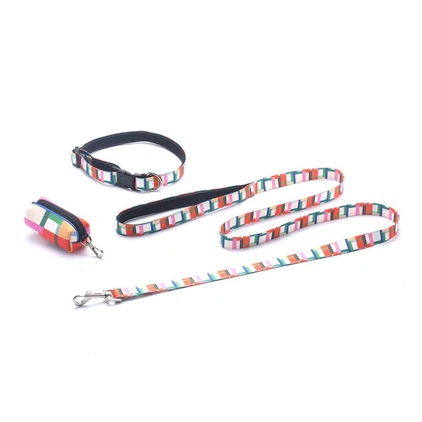

Go For A Sustainable Material
A dog leash sometimes has to deal with quite a bit; after all, you walk with it in all weather conditions. Nylon belts fray over time, are susceptible to wear and tear and, in some cases mould can develop. Because of this, many people choose leather belts, which are not very good for the environment. The best alternative to a leather dog leash is a leash made of vegan leather. Vegan leather is produced fairly and humanely and lasts a long time.
A Comfortable Handle
Choose a material that is comfortable to hold and does not cut or abrade. Pay close attention to a neat finish and a soft material. If you have a dog that pulls a lot, it is wise to opt for a padded handle so that the leash is a bit softer.
Choose A Quality Product
We all know the saying, “you get what you pay for” , and there is also some truth to it with dog leashes. Cheap dog leashes are generally less resistant to wear and tear, so they don't last as long. In addition, they use cheap closures that can break down over time. A solid-quality dog leash is the best choice if you want to choose a safe and durable product.
Material of Dog Leash
Nylon
Nylon has the benefits of being a relatively cheap material, yet hard-wearing and strong. So, for a very reasonable price you get a good, durable leash.
Being a man-made fiber, it's available in a wide variety of colors and even multicolored patterns so nylon leashes offer a buyer the biggest scope for individuality if you fancy a leash that looks a little different.
Nylon doesn't shrink when wet and dries out fairly easily. It's also easy to clean, so it's a good all-round material.
Leather
Leather leashes are costlier than their Nylon counterparts. But with the price tag comes a little more class and style (if you like that sort of thing) and a very durable and long-lasting leash.
Nylon leashes have the tendency to fray over time whereas treated leather dog leash can literally last a lifetime.
They aren't impervious to chewing but are very strong. But with this strength comes a nice little fact that they soften and change shape with age to suit the hands of the handler that uses them. This makes them far more comfortable to grip. And leather isn't as abrasive on your skin as nylon either.
Chain
Leashes made of metal chain are the least popular of leashes available but are well suited to those dogs that just will not stop chewing their leash. They can be quite heavy depending on their size.
Be sure to consider the weight if using with a small puppy. Make sure the chain is as thin and as light as can be. But you will have to upgrade to heavier tougher ones as your dog grows so it will not break when they pull as a strong adult.
Reflective
Like a standard leash (which in effect they are), reflective leashes are usually made of leather or nylon but with the addition of a reflective material embedded into the leash.
These leashes, in combination with a reflective collar, are good to use for owners that walk their dogs along country roads at night that have little in the way of wide pathways but have cars and cyclists going past but close by.
Our Factory
Hangzhou Baiyi is a leading pet products manufacturer, offering standard and customized harnesses, leashes, and collars for pet travel, daily life, and training. With a 15,000 square meter factory equipped with advanced production equipment, including air compressors, printing machines, and laser cutting machines, we provide tailored products using various raw materials. Our professional team ensures rigorous quality control from procurement to packaging, delivering high-quality products worldwide. Having achieved sales in over 20 countries, including to Amazon sellers, wholesalers, and brand customers, we have a proven track record of exceeding $5 million in annual sales. With over four years of history, we are dedicated to meeting customer demands and seeking further cooperation opportunities.


Our Honor
Official certification, professional after sales service.


Asked Questions
As one of the most professional dog leash manufacturers and suppliers in China, we're featured by quality products and good service. Please rest assured to wholesale customized dog leash from our factory. Contact us for free sample.
Gradient Color Woven Dog Leash, shock absorbing dog lead, handmade dog leash