

Bringing a new harness into your dog's life can be an exciting yet challenging venture. As a dog harness supplier, I've seen firsthand how important it is to introduce a harness properly to ensure your furry friend's comfort and acceptance. Here's a step - by - step guide on how to make this process as smooth as possible.
Start with Familiarization
Before you even think about strapping the harness on your dog, let them get used to it. I've noticed that dogs are naturally curious creatures. When you first bring the harness home, leave it out in an area where your dog frequently hangs out. Let them sniff it, paw at it, and generally explore it at their own pace. This helps them associate the harness with a non - threatening, ordinary object in their environment.
For example, my neighbor's dog, a feisty little terrier named Max, was initially wary of the new harness I showed them. But when they left it in Max's play area for a couple of days, he started to show interest in it on his own. He'd nudge it with his nose and even lie next to it sometimes. This initial exploration is crucial as it reduces the fear factor when you're ready to put it on.
Positive Reinforcement
Once your dog is comfortable with the harness being around, it's time to start creating positive associations. You can do this by using treats. Hold the harness in your hand and give your dog a treat. Do this a few times so that they start to link the harness with something good.

I often tell my customers that a small piece of their dog's favorite treat can work wonders. After a couple of days of this treat - and - harness routine, most dogs start to look forward to seeing the harness because they know a treat is coming. You can also try talking to your dog in a soothing, happy voice when you're holding the harness. Dogs are really good at picking up on our emotions, and your positive attitude will go a long way in making them feel at ease.
First Fitting
Now that your dog has positive feelings about the harness, it's time for the first fitting. Start by letting them sniff the harness one more time. Then, gently place the harness over their head. Don't rush this step; take your time to make sure it's comfortable. If your dog seems nervous or tries to back out, stop immediately and give them a treat. Try again a few minutes later.
I've found that the key here is patience. Some dogs might take a few tries to get used to the feeling of the harness on their body. For instance, a big Labrador I worked with took about five attempts over a few days before he finally let us put the harness on without any struggle. Remember, it's all about keeping your dog calm and stress - free.
Short Wear Sessions
Once the harness is on, don't leave it on for too long at first. Start with short wear sessions, maybe just 5 - 10 minutes. Let your dog walk around in the house with it on. This gives them time to adjust to the new feeling and movement restrictions. During this time, keep giving them treats and praise.
I recommend using this time to let your dog explore different surfaces in the house. It can be a bit disorienting for them at first, but with positive reinforcement, they'll start to get used to it. If your dog seems to be in distress or is constantly trying to remove the harness, take it off and try again later.
Gradually Increase Wear Time
As your dog becomes more comfortable wearing the harness for short periods, you can gradually increase the wear time. Add a few more minutes each day. This slow transition helps your dog get used to having the harness on for longer periods without feeling overwhelmed.
I've had customers tell me that their dogs were eventually wearing the harness for hours without any issues after following this gradual approach. Just make sure to monitor your dog's behavior during this process. If they start to show signs of discomfort, like excessive scratching or whining, reduce the wear time and try again later.
Outdoor Adventures
Once your dog is comfortable wearing the harness indoors for extended periods, it's time to take them outside. The outdoor environment can be a whole new experience for them, and the harness will give you better control. Start with short walks in a quiet area, like a park or a less - busy street.
I always suggest bringing some treats with you on these first outdoor walks. If your dog gets distracted or nervous, you can use the treats to redirect their attention and keep them calm. As your dog gets more used to walking with the harness outside, you can gradually explore more challenging environments.
Choosing the Right Harness
As a dog harness supplier, I know that choosing the right harness is just as important as the introduction process. There are different types of harnesses available, like the front - clip harness, which is great for dogs that pull, and the back - clip harness, which is more suited for well - behaved dogs.
You also need to consider the size and material of the harness. Make sure to measure your dog's chest and neck accurately to get the right size. And when it comes to materials, look for something that's comfortable and durable. For example, neoprene is a popular choice because it's soft and flexible. You can check out our Neoprene Puppy Collar for a great option.
Additional Accessories
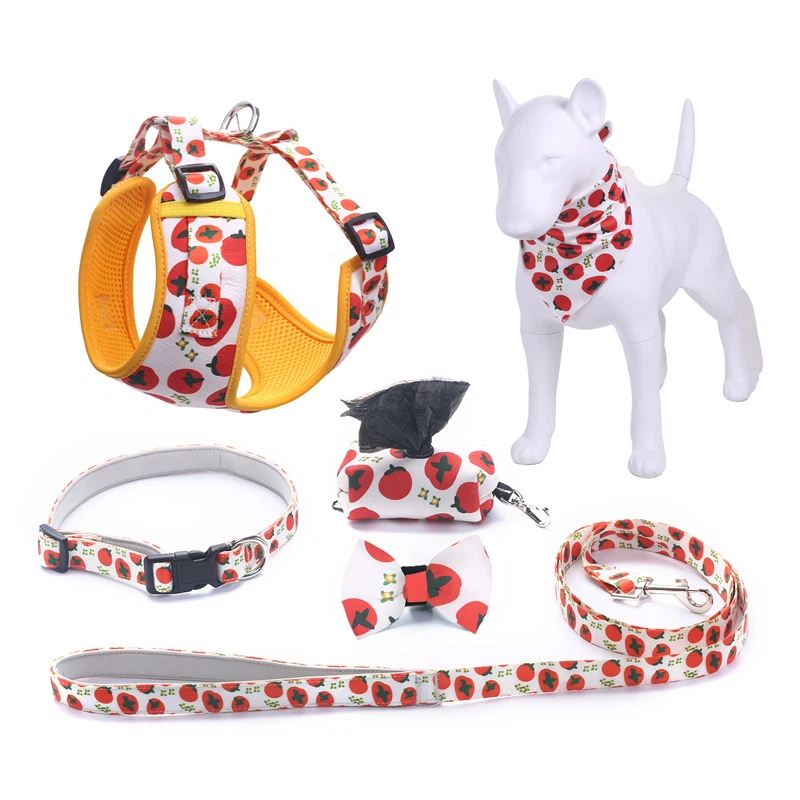
In addition to the harness, you might want to consider getting some other accessories for your dog. Our Custom Pet Six - piece Set is a great option. It includes a harness, a collar, a leash, and other useful items. And if you're looking for a stylish collar, our Dog Collar With Bones is a real eye - catcher.
Contact for Purchase
If you're interested in our dog harnesses or any of our other products, don't hesitate to reach out. We're always happy to help you find the perfect fit for your furry friend. Whether you have a small puppy or a large adult dog, we have a wide range of products to meet your needs.
References
- Overall, K. L. (2013). Clinical Behavioral Medicine for Small Animals. Mosby.
- Yin, S. (2015). Low - Stress Handling, Restraint and Behavior Modification of Dogs & Cats. SciVet Books.